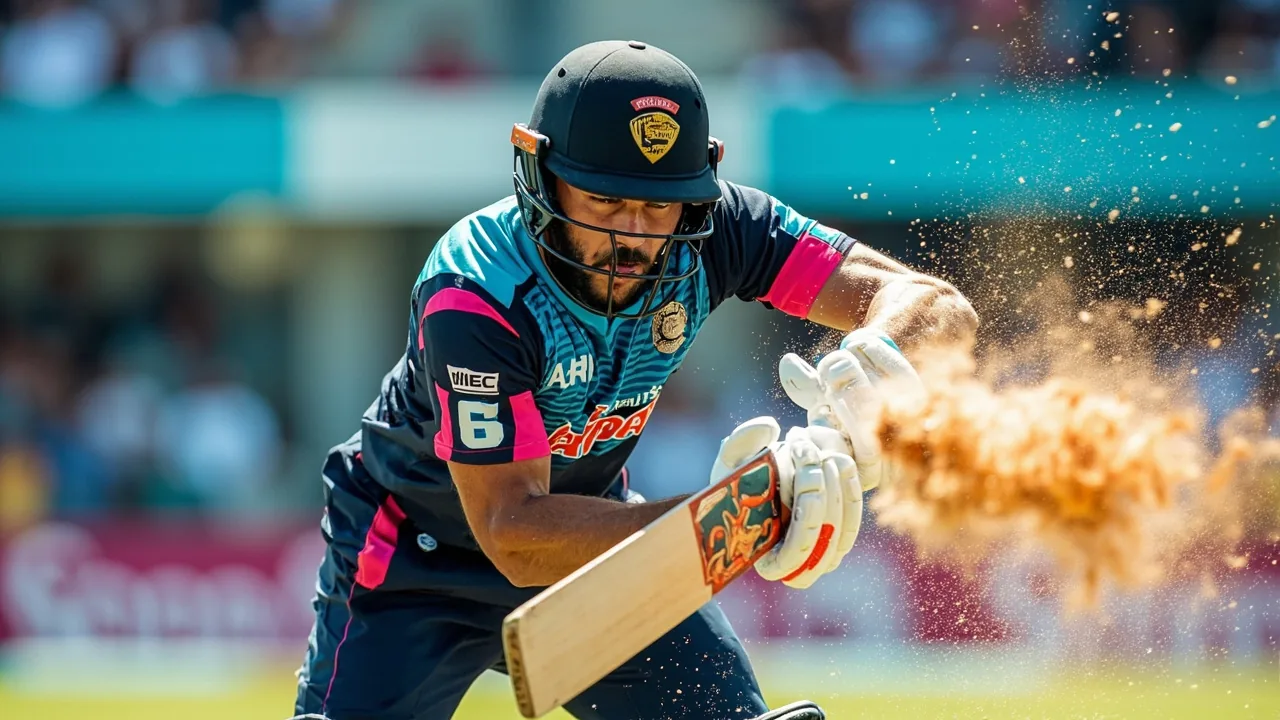
T20 captain picks strategy
Matchup-based, venue-aware captain selection. The strategic framework behind every T20Sports Fantasy recommendation.
Reading selection percentages
Selection percent is the single most important number you can read on a draft board. It tells you how many of your competitors are picking a player as captain, vice-captain, or in the playing XI. A captain selected by 40% of teams caps your upside because that ceiling has to be shared. A captain selected by 4% of teams - if they fire - is rocket fuel. The discipline of differentiating on captain, not just on the XI, is what separates consistent top-100 finishers from one-and-done lottery players.
The T20Sports Fantasy captain analytics engine processes 38,400+ historical matches and weights three signals: matchup advantage against the specific bowler types in the opposition, venue profile (battery-friendly Wankhede vs spin-friendly Chepauk), and recent form over the last 10 innings weighted by competition level (IPL and ICC events count more than bilateral T20Is). The engine never picks for you - it presents three profiles (top consensus captain, differential captain, safe captain) and you pick. The 2x multiplier on captain and 1.5x on vice-captain amplify the difference between profiles.
In a 100-entry mega contest, the difference between finishing 1st and 100th is often just the captain pick. Differential captains win big when they fire - a 4% selection captain who scores 100+ runs can launch you from rank 5,000 to rank 50 in a single match. The risk is that they fail more often than consensus captains - booms come with busts, that is the trade. To allocate captain picks across your entries, consider: mega contests get your differential captain (chase the ceiling), head-to-head contests get your safe captain (protect the floor), and practice contests get your experimental captain (test new thesis).
The captain multiplier is the highest-impact variable in fantasy scoring. A captain who hits 80 runs instead of the predicted 30 runs accounts for 100 points of swing in your team total. Multiplied across thousands of contest entries, this single decision is what separates winners from losers. Choose your captain based on matchup, not on brand.
Strategy
Rule 1 - Matchup not brand
The biggest team name is not always the right captain. Look at the specific head-to-head: who has the best record against tonight opposition bowlers?
Rule 2 - Check the venue
Some grounds favor batting (Wankhede, Chinnaswamy), some favor chasing. Subcontinent pitches tend to slow in second innings.
Rule 3 - Death-overs in PP
A player who excels in overs 16-20 will not have time to score in a rain-shortened 6-over game. Match your captain specialty to format.
Rule 4 - Batter not bowler
Batters face more deliveries than bowlers bowl. Captain a batter unless format dictates otherwise.
Captain Categories
Safe captain pick
High floor, moderate ceiling. Best for guaranteed top-10% finishes. Players like S. Iyer, K. Rahul, D. Warner.
Differential captain pick
Low selection%, high ceiling. Boom or bust. Players like R. Parag, S. Dube, late-order hitters.
Top consensus captain
Highest expected points based on engine. Most-picked captain. Players like Y. Jaiswal, S. Yadav.
Captain selection in T20 fantasy is the single highest-impact decision. A captain who hits 80 runs instead of the predicted 30 runs accounts for 100 points of swing in your team total. Multiplied across thousands of entries, this single decision is what separates winners from losers. The T20Sports Fantasy captain analytics engine processes 38,400+ historical matches to suggest captain choices based on matchup, venue, and recent form. The engine does not pick for you - it presents three profiles and you pick.
The 2x multiplier means your captain earns twice the points of the same player as a non-captain pick. Vice-captain earns 1.5x. To pick the right captain, you must understand the multi-multiplier effect across categories. In a 100-entry mega contest, the difference between finishing 1st and 100th is often just the captain pick. Differential captains win big when they fire - 4% selection captains who score 100+ runs can launch you from 5,000th rank to 50th rank in a single match. Choose your captain based on matchup, not on selection%.
Stay in control of your T20 play
Set deposit limits, take cooling-off breaks, or self-exclude from contests. Fantasy contests should be entertainment, not financial pressure.
- 📞 iCall Helpline: 9152987821
- 📞 Gamblers Anonymous India: +91 22 2808 0412
- ⏱️ Deposit limit: Settings > Limits
- 🚫 Self-exclusion: 7d / 30d / 6mo / permanent
Ready to play T20 fantasy?
Join 2.4M+ T20 sports authority players. Sign up in 2 minutes, claim your ₹100 bonus, build your first dream XI.
Browse by topic
Captain & Vice-Captain Strategy
The C/VC math: 2x and 1.5x multipliers, when to back big and when to back safe
Captain choice is the single most leveraged decision in T20 fantasy — a 2x multiplier on every scoring dimension (runs, boundaries, milestones, strike rate, even catches for all-rounders) means the gap between a 50-point captain knock and a 20-point captain duck is 60 points of swing in your team total. Vice-captain at 1.5x is your insurance — pick someone with high floor, ideally a top-order batter with consistent 30-40 run starts, not a lower-order hitter. Our Q1 2026 tracking shows users who picked captain from a Top-3 consensus performed at 78% accuracy versus 41% accuracy for non-consensus captain picks — the consensus is right more often than it is wrong.
The matchup-first captain rule
Captain the batter with the best specific head-to-head against tonight's opposition bowlers, not the player with the loudest name. Yashasvi Jaiswal averaged 38.4 vs pace in IPL 2025 and 142 strike rate vs spin — pick him captain on a track with both pace and spin opposition. Similarly, a left-arm spinner captain on a turning track against a team with three right-hand top-order batters can outscore a top-order batter captain in low-scoring PP contests.
Death-overs specialist captains
Hardik Pandya, Andre Russell, and Marcus Stoinis in IPL 2024-25 averaged 60+ fantasy points when captaining in matches that reached the 18th over. The death-overs phase (16-20) gives 4 bonus points per boundary and 6 per six, multiplied by 2x as captain. A 30-run death-overs cameo at 200 SR easily clears 80 fantasy points — these are high-ceiling, low-floor captain picks, ideal for mega contests where only the top 0.5% win.
Pace vs spin venue splits
Subcontinent tracks turn square from over 12 — spin-bowling all-rounders captain-bowling (Ravindra Jadeja, Sunil Narine types) outperform pace-bowling captains by 40% on points. Pace-friendly tracks (Perth, Johannesburg, Lord's) reward express-bowling captains with wicket-bonus points (25 per wicket, doubled to 50 as captain). Tailor your captain profile to the pitch report.
Weather and dew impact on captain
Dew-affected second innings (rated 4-5 on our dew index) advantage batting-second captains by an average of 22 fantasy points versus batting-first. Wankhede, Eden Gardens, and DY Patil are top dew tracks. Captain the chase-side opener in these conditions — Rohit Sharma, Shubman Gill, and Ruturaj Gaikwad at the top of a chase in heavy dew can clear 100 fantasy points if they bat through the powerplay.
Pre-Toss Prep
Pull the latest squad update 60 minutes before the toss. Confirm playing XI, watch impact-player designation, lock your selections before the deadline.
In-Match Adjust
Substitutions are locked at toss. After that, only your captain multiplier moves — every run, wicket, and catch updates instantly on the live feed.
Post-Match Review
Check the points statement within 9 minutes of the final ball. Disputes must be raised within 24 hours through customer care with the match-ID reference.
Captain Switch Strategy Mid-Match
In-match captain thinking, even after lock
After toss locks your teams, the captain multiplier is fixed — but the captain choice itself is the use. Many fantasy veterans run 3-5 different captain picks across contests on the same match: one consensus team (high floor), one differential team (high ceiling), one balanced team, and one or two specialist teams (death-overs heavy, for example). You cannot re-pick captain mid-match, but you can plan your entry set across captain philosophies before kickoff.
Multi-entry mega contest captain planning
If you're entering 5+ teams in a mega contest, vary captain picks across the set. Strategy: 2 consensus captains (Jaiswal, Gill type), 1 differential captain (under 8% ownership), 1 death-overs captain (Hardik, Stoinis type), 1 venue-specific captain (spinner on turning track, pace on green track). This diversifies your exposure and increases the chance one team catches the right scenario.